
Table of Content
- Introduction
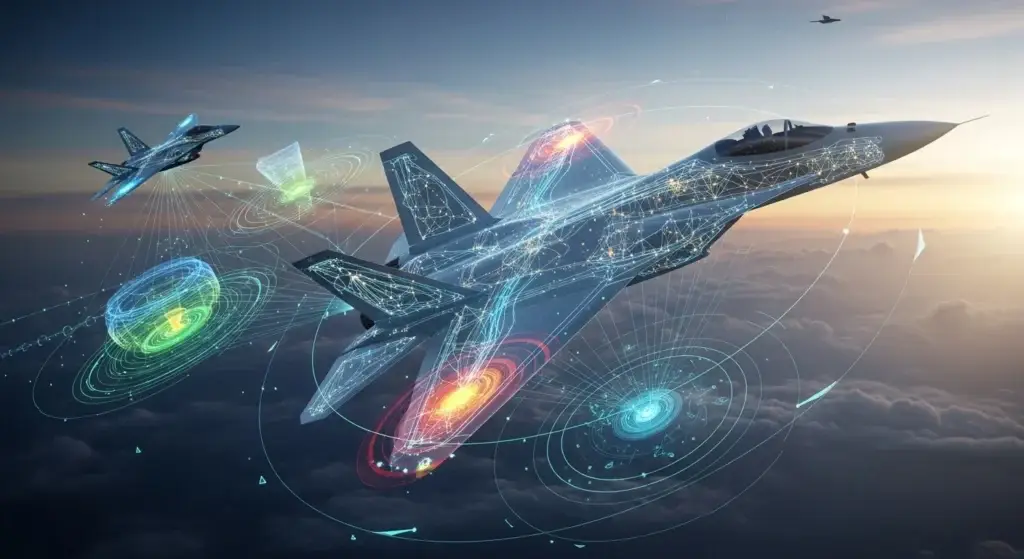
- Image
- Background / Context
- Detailed Technical Breakdown
- Strategic Importance
- Real-World Examples & Program Status
- Expert-Level Analysis
- Future Warfare Impact
- Comparison Section
- Key Takeaways
- Conclusion
- FAQ
Introduction
On 21 March 2026, the U.S. Air Force quietly confirmed that the Next Generation Air Dominance (NGAD) family of systems had achieved “critical design review maturity” for its crewed sixth-generation fighter platform — the first public milestone since the program’s secretive restructuring in late 2024. At roughly the same time, European FCAS partners (France, Germany, Spain) released updated digital mock-ups showing a tailless diamond-wing configuration with integrated loyal wingman bays, while the UK-led Tempest program unveiled wind-tunnel data confirming Mach 2+ supercruise capability.
These near-simultaneous disclosures mark 2026 as the inflection point when sixth-generation fighter jets transitioned from PowerPoint concepts to industrial reality. Unlike fifth-generation platforms (F-22, F-35, J-20, Su-57) that prioritized stealth and sensor fusion, sixth-generation design philosophy centers on artificial intelligence in warfare analysis, AI military strategy 2026, AI decision making battlefield, autonomous weapons strategic impact, AI-enabled targeting systems, and deep AI battlefield integration — all orchestrated within a human-on-the-loop command architecture.
The central question is no longer “Will sixth-generation fighters be more stealthy?” — it is: “Can they survive and win in an environment where the electromagnetic spectrum is contested, AI-enabled swarms saturate airspace, and decision loops must compress to seconds?” The emerging answer: Yes — but only if they are designed as command nodes for autonomous ecosystems rather than standalone platforms.
This article delivers a comprehensive, evidence-based explanation of what sixth-generation fighter jets actually are, how they differ from fifth-generation systems, which nations lead versus lag, and how AI multi domain operations and future of AI warfare systems will redefine air combat through 2035. For military planners, defense industry executives, and strategic analysts, understanding this transition is now mission-critical.
For context on complementary systems, see our recent analyses:
- How Drone Swarm Warfare Works: Tactical Advantages & Counter-Drone Strategies in 2026
- Can Autonomous Combat Drones Replace Fighter Jets? Future Air Warfare Explained
- Why Cyber Resilience Will Define Military Strategy by 2030

Background / Context
Sixth-generation fighter programs emerged in the early 2010s as successors to fifth-generation stealth platforms. The defining requirements crystallized around 2020–2023:
- Penetrate and persist in heavily contested airspace (A2/AD environments)
- Orchestrate large numbers of autonomous collaborative combat aircraft (CCA / loyal wingmen)
- Survive and operate in electromagnetic spectrum denial scenarios
- Compress kill chains through AI decision making battlefield and AI-enabled targeting systems
- Maintain human command authority in lethal decisions (military AI vs human command)
Major programs active in 2026:
- United States → Next Generation Air Dominance (NGAD) family — crewed fighter + CCA Increment 1 & 2
- United Kingdom / Italy / Japan → Global Combat Air Programme (GCAP / Tempest)
- France / Germany / Spain → Future Combat Air System (FCAS / SCAF)
- China → Next-generation stealth fighter (unofficial designation “J-XX” or “J-36”) + GJ-11 / various loyal wingmen
- Russia → Mikoyan PAK DP (MiG-41 successor) — status uncertain due to funding and sanctions
2025–2026 milestones include NGAD critical design review, GCAP wind-tunnel validation, FCAS digital twin maturation, and Chinese flight-testing footage of tailless configurations with drone bays.
Detailed Technical Breakdown
Core Attributes of Sixth-Generation Fighters (2026–2035)
- Adaptive Stealth & Signature Management Broadband low-observable coatings, plasma stealth research, and dynamic RF management. Unlike F-35 fixed LO design, sixth-gen platforms will change signatures in real time to confuse enemy sensors.
- AI-Driven Sensor Fusion & TargetingAI-enabled targeting systems integrate onboard AESA, distributed aperture systems, off-board CCA feeds, satellite data, and ground nodes. Reinforcement learning predicts adversary maneuvers and recommends optimal engagements, reducing pilot workload by 60–80% in DARPA ACE program simulations (2025 results). For more on autonomy software maturation, see the DARPA Air Combat Evolution (ACE) program overview.
- Manned-Unmanned Teaming Architecture One crewed fighter commands 4–8 collaborative combat aircraft. AI multi domain operations allow drones to execute SEAD, ISR, EW, and strike roles while the pilot maintains military AI vs human command oversight.
- Adaptive Cycle Engines & Range/Persistence Variable-cycle engines (adaptive three-stream designs) enable subsonic efficiency and Mach 2+ supercruise. Projected combat radius exceeds 1,500–2,000 nautical miles without refueling.
- Directed-Energy & High-Power Microwave Weapons Internal solid-state lasers and HPM systems for counter-drone and counter-missile defense — critical against drone swarm warfare strategy saturation attacks.
- Resilient Communications Quantum key distribution (QKD) prototypes and post-quantum cryptography protect datalinks. Mesh networking maintains connectivity even when satellites are jammed or destroyed.
These capabilities collectively create a “system of systems” where the crewed fighter acts as a battlefield manager rather than a primary shooter.
Strategic Importance
Sixth-generation fighters matter strategically because they restore air dominance in A2/AD environments where fifth-generation platforms face increasing risk. AI military strategy 2026 embedded in these aircraft allows forces to:
- Penetrate defended airspace at acceptable loss rates
- Orchestrate autonomous assets at machine speed
- Maintain decision superiority through AI decision making battlefield
- Deter peer adversaries by demonstrating credible deep-strike capability
For smaller or mid-tier powers (including Pakistan), sixth-generation technology creates a widening capability gap. Nations unable to field or counter these systems risk losing air control in future conflicts — even if they possess large fourth- and fifth-generation fleets.
Doctrinally, air forces are shifting from “platform-centric” to “family-of-systems” models. The fighter becomes the command node; drones become the effectors. This mirrors the AI battlefield integration seen in Ukraine drone operations — but at transonic/supersonic speeds and extreme ranges.
Real-World Examples & Program Status (2025–2026)
- USA NGAD — Critical design review passed (March 2026); Boeing, Lockheed Martin, Northrop Grumman competing. CCA Increment 1 (General Atomics YFQ-42A / Anduril YFQ-44A) in flight test. First operational capability targeted 2029–2030.
- UK / Italy / Japan GCAP → Wind-tunnel tests confirm supercruise; BAE Systems digital engineering hub operational. In-service date ~2035.
- France / Germany / Spain FCAS → Phase 1B contract awarded 2025; Dassault / Airbus / Indra digital twins running millions of simulated hours.
- China → Multiple tailless prototypes flying; November 2025 footage showed GJ-11 with J-20. Aggressive timeline suggests IOC before 2030.
- Russia → PAK DP funding uncertain; focus remains on Su-57 upgrades.
For detailed operational lessons from related drone employment, see the IISS Strategic Dossier on Drone Warfare in Ukraine 2026.
Expert-Level Analysis
Strengths
- Exponential force multiplication through loyal wingmen
- Reduced pilot risk in high-threat penetration missions
- Machine-speed decision cycles against hypersonic and swarm threats
Weaknesses & Limitations
- Extremely high program cost (NGAD estimated >$300 billion lifecycle)
- AI brittleness in edge-case scenarios (military AI vs human command tension)
- Supply-chain vulnerabilities for advanced materials and processors
- Escalation risks if autonomous systems misinterpret ROE
Countermeasures & Mitigations
- Human-on-the-loop oversight for lethal decisions
- Red-team AI stress-testing (DARPA, NATO CCDCOE)
- Diversified supply chains and domestic production of critical components
For deeper quantitative trade-off modeling, refer to the RAND Corporation report on autonomous air systems.
Future Warfare Impact
By 2035, sixth-generation squadrons will consist of 1–2 crewed fighters commanding 8–12 autonomous wingmen per formation. AI multi domain operations will fuse air, space, cyber, and electromagnetic effects at machine speed.
Future warfare prediction: In a 2035 Indo-Pacific contingency, Chinese sixth-generation platforms with GJ-11 swarms will attempt to create an “autonomous air hellscape” over the first island chain. U.S./allied NGAD + CCA teams will counter with superior sensor fusion and adaptive electronic warfare — but victory will hinge on which side maintains AI battlefield integration longest under cyber and kinetic attack.
Global sixth-generation investment is projected to exceed $500 billion cumulatively by 2040 (CSIS & RAND estimates).
Comparison Section: Sixth-Generation Programs 2026–2035
| Nation / Program | Crewed IOC Target | Loyal Wingmen Ratio | Stealth Maturity | AI Autonomy Level | Projected Cost per Aircraft | Current Lead Position |
|---|---|---|---|---|---|---|
| USA NGAD | 2029–2030 | 1:4–1:8 | Very High | 4–5 | ~$250–300M | Leading |
| China (J-XX) | ~2030–2032 | 1:6+ | High | 4+ | ~$100–150M | Scale & speed |
| UK/Italy/Japan GCAP | 2035 | 1:4–1:6 | High | 4 | ~$200–250M | Collaborative maturity |
| France/Germany/Spain FCAS | 2040 | 1:4–1:8 | High | 4 | ~$220–280M | Digital engineering |
| Russia PAK DP | Uncertain | Limited | Medium | 3–4 | Unknown | Lagging |
Key Takeaways
- Sixth-generation fighters are command nodes for autonomous ecosystems — not standalone platforms.
- AI military strategy 2026 and AI-enabled targeting systems drive the core capability leap.
- USA leads integration maturity; China leads speed-to-field and cost.
- Human oversight remains non-negotiable for lethal decisions.
- AI battlefield integration will separate winners from losers in future air campaigns.
- Nations must invest in loyal wingmen, adaptive engines, and resilient C2 now.
Conclusion
Sixth-generation fighter jets will not be defined by incremental stealth improvements — they will be defined by their ability to orchestrate autonomous weapons strategic impact, AI decision making battlefield, and AI multi domain operations at scales and speeds impossible for fifth-generation platforms. The crewed fighter survives as the irreplaceable human decision node inside an increasingly autonomous air combat cloud.
The nations that most effectively integrate military artificial intelligence, AI defense systems, and future of AI warfare systems into sixth-generation squadrons will hold air dominance through 2040 and beyond. The race is already underway — and the finish line is measured in operational squadrons, not prototypes.
FuturWave.com continues to lead global defense analysis on the future of airpower. Defense organizations, OEMs, and strategic think tanks seeking in-depth program assessments, scenario modeling, or customized briefings on sixth-generation integration are invited to connect directly — the next era of air combat is taking shape now.
What makes sixth-generation fighter jets different from fifth-generation?
They are designed as command nodes for loyal wingmen swarms, with AI battlefield integration, adaptive engines, directed-energy weapons, and human-on-the-loop autonomy — not just better stealth.
Which country leads sixth-generation fighter development in 2026?
The United States leads in program maturity and integration (NGAD + CCA); China leads in speed-to-field and projected scale.
Will autonomous combat drones replace the crewed sixth-generation fighter?
No. Drones will be force multipliers and effectors; the crewed platform remains essential for ethical judgment, coalition command, and adaptive decision-making.
What is the biggest technical challenge for sixth-generation programs?
Achieving reliable AI military strategy and AI-enabled targeting systems in contested electromagnetic environments while maintaining human oversight for lethal actions.
When will sixth-generation fighters enter frontline service?
USA ~2029–2030 (NGAD), China ~2030–2032, GCAP ~2035, FCAS ~2040. Russia uncertain.